
Mouse Secondary Antibodies

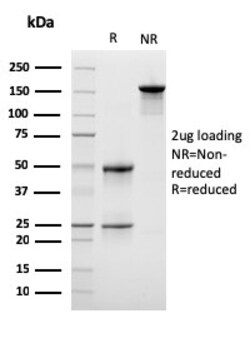
Biotium Lymphocyte Specific Protein 1 (LSP1) / pp52(LSP1/3042), CF740 conjugate, 0.1mg/mL
LSP1 is a hematopoietic-expressed gene that encodes an F-actin-binding, leukocyte-specific (including B and T lymphocytes, granulocytes and macrophages), phosphoprotein. However, mRNA splice variants that do not encode the lympho-specific protein are expressed from this gene in nonlymphoid cell lines as well (myocytes, stromal cells and fibroblasts), suggesting pp52 has a divergent role in signal transduction. The pp52 (LSP1) locus maps to human chromosome 11p15. 5, which is implicated in tumor-related chromosomal translocations found in chronic lymphocytic leukemia. The pp52 promoter contains key elements that control transcriptional activity including an initiator specifying the unique 5' terminus of pp52 mRNA, tandem pairs of Ets and SP1 motifs, and a single C/EBP motif. LSP1 binds the cytoskeleton and has been implicated in affecting cytoskeletal remodeling in a variety of leukocyte functions, including cell motility and chemotaxis. Primary antibodies are available purifi

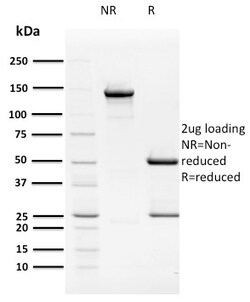
Biotium HPV16 E2 (Human Papilloma Virus 16)(TVG 261), CF740 conjugate, 0.1mg/mL
The human papilloma virus (HPV) family of DNA tumor viruses includes HPV16, a strain that is responsible for the largest number of cases of cervical cancers linked to the family. HPV16E1 and HPV16E2 are proteins that are involved in the regulation of viral DNA replication and are important for infected cell homeostasis. HPV16E2 specifically regulates the expression of the E6 and E7 oncoproteins by binding to four sites within the viral long control region, possibly involving interactions with nuclear hormone receptors. Integration of the HPV genome into the host DNA usually disrupts the HPV16E2 gene open reading frames, resulting in an overexpression of E6 and E7 genes, an event that may lead to the malignant transformation of cervical cancer. HPV16E2 is also able to induce apoptotic cell death via two pathways: the first through the binding of p53 and the second through the binding of the viral genome. Primary antibodies are available purified, or with a selection of fluores
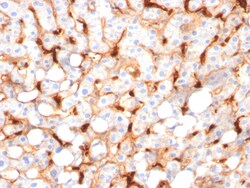
Biotium C1QB / Complement C1q B-Chain(C1QB/2966), 0.2mg/mL
Complement C1q B Chain (C1qb) is a subunit of C1q. C1q is composed of 6 polypeptide chains each of C1qa, C1qb, and C1qc. C1q is a component of the classical complement pathway, and thereby plays an important role in the immune response. Each C1q subunit contains an N-terminal collagen-like region and a C-terminal C1q globular domain. The presence of receptors for C1q on effector cells modulates its activity, which may be antibody-dependent or independent. Macrophages are the primary source of C1q, while anti-inflammatory drugs as well as cytokines differentially regulate expression of the mRNA as well as the protein. C1q deficiency is associated with lupus erythematosus and glomerulonephritis. Primary antibodies are available purified, or with a selection of fluorescent CF Dyes and other labels. CF Dyes offer exceptional brightness and photostability. Note: Conjugates of blue fluorescent dyes like CF405S and CF405M are not recommended for detecting low abundance targets,
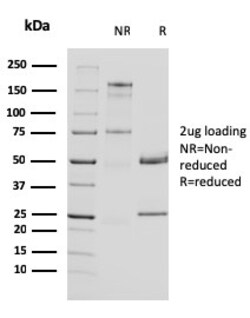
Biotium Uroplakin 1A (Urothelial Differentiation Marker)(UPK1A/2924), 0.2mg/mL
The protein encoded by this gene is a member of the transmembrane 4 superfamily, also known as the tetraspanin family. Most of these members are cell-surface proteins that are characterized by the presence of four hydrophobic domains. The proteins mediate signal transduction events that play a role in the regulation of cell development, activation, growth and motility. This encoded protein is found in the asymmetrical unit membrane (AUM) where it can complex with other transmembrane 4 superfamily proteins. It may play a role in normal bladder epithelial physiology, possibly in regulating membrane permeability of superficial umbrella cells or in stabilizing the apical membrane through AUM/cytoskeletal interactions. The protein may also play a role in tumor suppression. Primary antibodies are available purified, or with a selection of fluorescent CF Dyes and other labels. CF Dyes offer exceptional brightness and photostability. Note: Conjugates of blue fluorescent dyes like
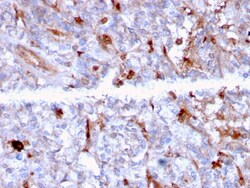
Biotium C1QA / Complement C1q A-Chain(C1QA/2956), 0.2mg/mL
Complement C1q A Chain (C1qa) is a subunit of C1q. C1q is composed of 6 polypeptide chains each of C1qa, C1qb, and C1qc. C1q is a component of the classical complement pathway, and thereby plays an important role in the immune response. Each C1q subunit contains an N-terminal collagen-like region and a C-terminal C1q globular domain. The presence of receptors for C1q on effector cells modulates its activity, which may be antibody-dependent or independent. Macrophages are the primary source of C1q, while anti-inflammatory drugs as well as cytokines differentially regulate expression of the mRNA as well as the protein. C1q deficiency is associated with lupus erythematosus and glomerulonephritis. Primary antibodies are available purified, or with a selection of fluorescent CF Dyes and other labels. CF Dyes offer exceptional brightness and photostability. Note: Conjugates of blue fluorescent dyes like CF405S and CF405M are not recommended for detecting low abundance targets,
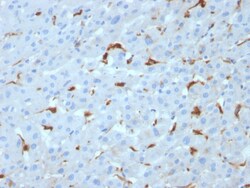
Biotium C1QA / Complement C1q A-Chain(C1QA/2953), 0.2mg/mL
Complement C1q A Chain (C1qa) is a subunit of C1q. C1q is composed of 6 polypeptide chains each of C1qa, C1qb, and C1qc. C1q is a component of the classical complement pathway, and thereby plays an important role in the immune response. Each C1q subunit contains an N-terminal collagen-like region and a C-terminal C1q globular domain. The presence of receptors for C1q on effector cells modulates its activity, which may be antibody-dependent or independent. Macrophages are the primary source of C1q, while anti-inflammatory drugs as well as cytokines differentially regulate expression of the mRNA as well as the protein. C1q deficiency is associated with lupus erythematosus and glomerulonephritis. Primary antibodies are available purified, or with a selection of fluorescent CF Dyes and other labels. CF Dyes offer exceptional brightness and photostability. Note: Conjugates of blue fluorescent dyes like CF405S and CF405M are not recommended for detecting low abundance targets,
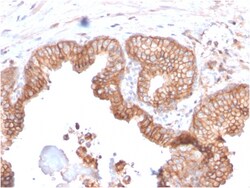
Biotium CD47 / IAP (Integrin Associated Protein)(CD47/2937), 0.2mg/mL
This antibody reacts with Ig domain of CD47 protein. CD47, originally named integrin-associated protein (IAP), is a 50 kDa protein containing five membrane-spanning sequences and a short cytoplasmic tail. CD47 plays a role in both cell adhesion by acting as an adhesion receptor for THBS1 on platelets, and in the modulation of integrins. It is important in memory formation and synaptic plasticity in the hippocampus. CD47 may play a role in membrane transport and/or integrin dependent signal transduction. Primary antibodies are available purified, or with a selection of fluorescent CF Dyes and other labels. CF Dyes offer exceptional brightness and photostability. Note: Conjugates of blue fluorescent dyes like CF405S and CF405M are not recommended for detecting low abundance targets, because blue dyes have lower fluorescence and can give higher non-specific background than other dye colors.
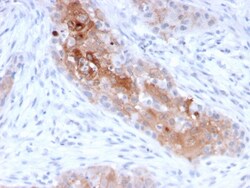
Biotium Desmoglein-1 (DSG1)(32-2B), 0.2mg/mL
Recognizes a protein of ~150 kDa, identified as Desmoglein-1 (DSG1). Desmoglein-1 is a member of the desmosomal cadherin family. Desmosomes are intercellular adhering junctions that represent cell surface attachment sites for intermediate filament. Desmocollins and desmogleins are the main desmosomal transmembrane proteins. Desmogleins consist of Dsg1, Dsg2, Dsg3, and Dsg4 isoforms. Within the desmosome, the extracellular domain of desmoglein is essential for calcium dependent heterophilic binding to the desmocollins, whereas the intracellular domain is essential for binding to the desmosomal plaque protein, plakoglobin. Desmoglein 1 is synthesized exclusively in the suprabasal layers. Intact and functionally active desmoglein 1 is essential to epidermal integrity. Primary antibodies are available purified, or with a selection of fluorescent CF Dyes and other labels. CF Dyes offer exceptional brightness and photostability. Note: Conjugates of blue fluorescent dyes like CF
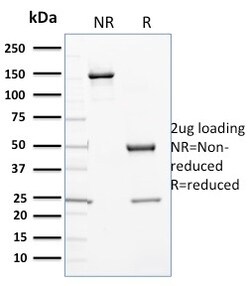
Biotium Cytochrome P450 3A1 / CYP3A1(P6), 0.2mg/mL
Cytochrome P450 oxidase (commonly abbreviated CYP) is a generic term for a large number of related, but distinct, oxidative enzymes important in vertebrate physiology. The cytochrome P450 mixed-function monooxygenase system is probably the most important element of Phase I metabolism in mammals. P450s are membrane-bound, either in the inner membrane of mitochondria or in the endoplasmic reticulum of cells where they metabolise thousands of endogenous and exogenous compounds. In the liver, these substrates include toxins, drugs, and other unneeded and potentially harmful molecules. Humans have 18 families of cytochrome P450 genes and 43 subfamilies; the CYP1 family is involved in drug metabolism and includes 3 subfamilies, 3 genes and 1 pseudogene. The CYP2 family are part of the microsomal drug metabolising system that is responsible for oxidation of many therapeutic agents as well as steroids, fatty acids and many other endogenous substances. Cytochrome P450 3A4 is abundantl
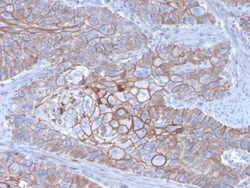
Biotium E-Cadherin (CDH1) / CD324 (Intercellular Junction Marker)(CDH1/3256), CF488A conjugate, 0.1mg/mL
Recognizes a protein of 120-80 kDa, identified as E-cadherin. Cadherins comprise a family of Ca2 -dependent adhesion molecules that function to mediate cell-cell binding critical to the maintenance of tissue structure and morphogenesis. The classical cadherins, E-, N- and P-cadherin, consist of large extracellular domains characterized by a series of five homologous NH2 terminal repeats. The relatively short intracellular domains interact with a variety of cytoplasmic proteins, such as -catenin, to regulate cadherin function. E-cadherin plays an important role in epithelial cell adhesion. A decreased expression of E-cadherin is associated with metastatic potential and poor prognosis in breast cancer, prostate and esophageal cancer. In combination with p120 Catenin, it is useful for the differentiation between ductal (E-cadherin ) and lobular (E-cadherin -) breast carcinomas. It may also help in diagnosis of mesothelioma. Primary antibodies are available purified, or with a s
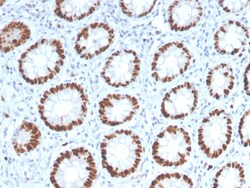
Biotium MCM6 (Proliferation Marker)(MCM6/2999), Biotin conjugate, 0.1mg/mL
The mini-chromosome maintenance (MCM) family of proteins, including MCM2, MCM3, MCM6 (Cdc21), MCM5 (Cdc46), MCM6 (Mis5) and MCM7 (Cdc47), are regulators of DNA replication that act to ensure replication occurs only once in the cell cycle. Expression of MCM proteins increases during cell growth, peaking at G1/S phase. The MCM proteins each contain an ATP-binding motif, which is predicted to mediate ATP-dependent opening of double-stranded DNA. MCM proteins are regulated by E2F transcription factors, which induce MCM expression, and by protein kinases, which interact with MCM proteins to maintain the post-replicative state of the cell. MCM2/MCM6 complexes function as substrates for Cdc2/cyclin B in vitro. Primary antibodies are available purified, or with a selection of fluorescent CF Dyes and other labels. CF Dyes offer exceptional brightness and photostability. Note: Conjugates of blue fluorescent dyes like CF405S and CF405M are not recommended for detecting low abundanc
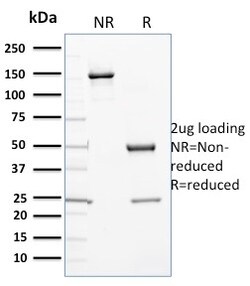
Biotium Cytochrome P450 3A1 / CYP3A1(P6), Biotin conjugate, 0.1mg/mL
Cytochrome P450 oxidase (commonly abbreviated CYP) is a generic term for a large number of related, but distinct, oxidative enzymes important in vertebrate physiology. The cytochrome P450 mixed-function monooxygenase system is probably the most important element of Phase I metabolism in mammals. P450s are membrane-bound, either in the inner membrane of mitochondria or in the endoplasmic reticulum of cells where they metabolise thousands of endogenous and exogenous compounds. In the liver, these substrates include toxins, drugs, and other unneeded and potentially harmful molecules. Humans have 18 families of cytochrome P450 genes and 43 subfamilies; the CYP1 family is involved in drug metabolism and includes 3 subfamilies, 3 genes and 1 pseudogene. The CYP2 family are part of the microsomal drug metabolising system that is responsible for oxidation of many therapeutic agents as well as steroids, fatty acids and many other endogenous substances. Cytochrome P450 3A4 is abundantl
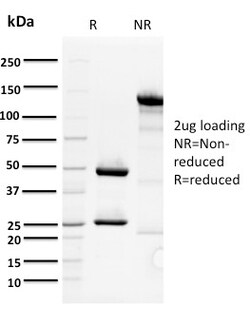
Biotium ORC1(7F6/1), Biotin conjugate, 0.1mg/mL
The initiation of DNA replication is a multi-step process that depends on the formation of pre-replication complexes, which trigger initiation. Among the proteins required for establishing these complexes are the origin recognition complex (ORC) proteins. ORC proteins bind specifically to origins of replication where they serve as scaffold for the assembly of additional initiation factors. Human ORC subunits 1-6 are expressed in the nucleus of proliferating cells and tissues, such as the testis. ORC1 and ORC2 are both expressed at equivalent concentrations throughout the cell cycle; however, only ORC2 remains stably bound to chromatin. ORC4 and ORC6 are also expressed constantly throughout the cell cycle. ORC2, ORC3, ORC4 and ORC5 form a core complex upon which ORC6 and ORC1 assemble. The formation of this core complex suggests that ORC proteins play a crucial role in the G1-S transition in mammalian cells. Primary antibodies are available purified, or with a selection of flu

Biotium Sarcomeric Actinin Alpha 2 / ACTN2(ACTN2/3293), CF488A conjugate, 0.1mg/mL
Alpha actinins belong to the spectrin gene superfamily which represents a diverse group of cytoskeletal proteins, including the alpha and beta spectrins and dystrophins. Alpha actinin is an actin-binding protein with multiple roles in different cell types. In non-muscle cells, the cytoskeletal isoform is found along microfilament bundles and adherens-type junctions, where it is involved in binding actin to the membrane. In contrast, skeletal, cardiac, and smooth muscle isoforms are localized to the Z-disc and analogous dense bodies, where they help anchor the myofibrillar actin filaments. This gene encodes a muscle-specific, alpha actinin isoform that is expressed in both skeletal and cardiac muscles. Several transcript variants encoding different isoforms have been found for this gene. Primary antibodies are available purified, or with a selection of fluorescent CF Dyes and other labels. CF Dyes offer exceptional brightness and photostability. Note: Conjugates of blue flu
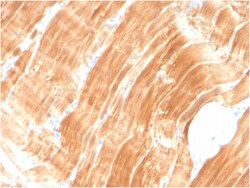
Biotium Sarcomeric Actinin Alpha 2 / ACTN2(ACTN2/3294), CF488A conjugate, 0.1mg/mL
Alpha actinins belong to the spectrin gene superfamily which represents a diverse group of cytoskeletal proteins, including the alpha and beta spectrins and dystrophins. Alpha actinin is an actin-binding protein with multiple roles in different cell types. In non-muscle cells, the cytoskeletal isoform is found along microfilament bundles and adherens-type junctions, where it is involved in binding actin to the membrane. In contrast, skeletal, cardiac, and smooth muscle isoforms are localized to the Z-disc and analogous dense bodies, where they help anchor the myofibrillar actin filaments. This gene encodes a muscle-specific, alpha actinin isoform that is expressed in both skeletal and cardiac muscles. Several transcript variants encoding different isoforms have been found for this gene. Primary antibodies are available purified, or with a selection of fluorescent CF Dyes and other labels. CF Dyes offer exceptional brightness and photostability. Note: Conjugates of blue flu